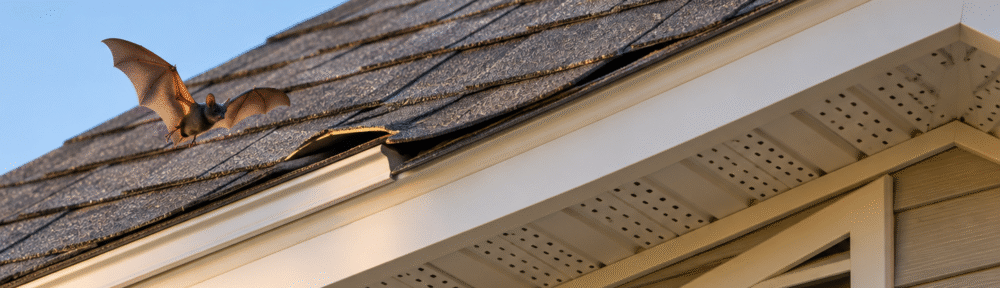
You had the bats removed. So why are you hearing scratching in the attic again? The answer usually comes down to one costly mistake: incomplete exclusion. Bats don’t need much room to slip back into a home—a gap as small as 3/8 inch is all it takes. If even one entry point goes unsealed, the colony (or a new one) will find its way back in.
The #1 Mistake: Incomplete Exclusion
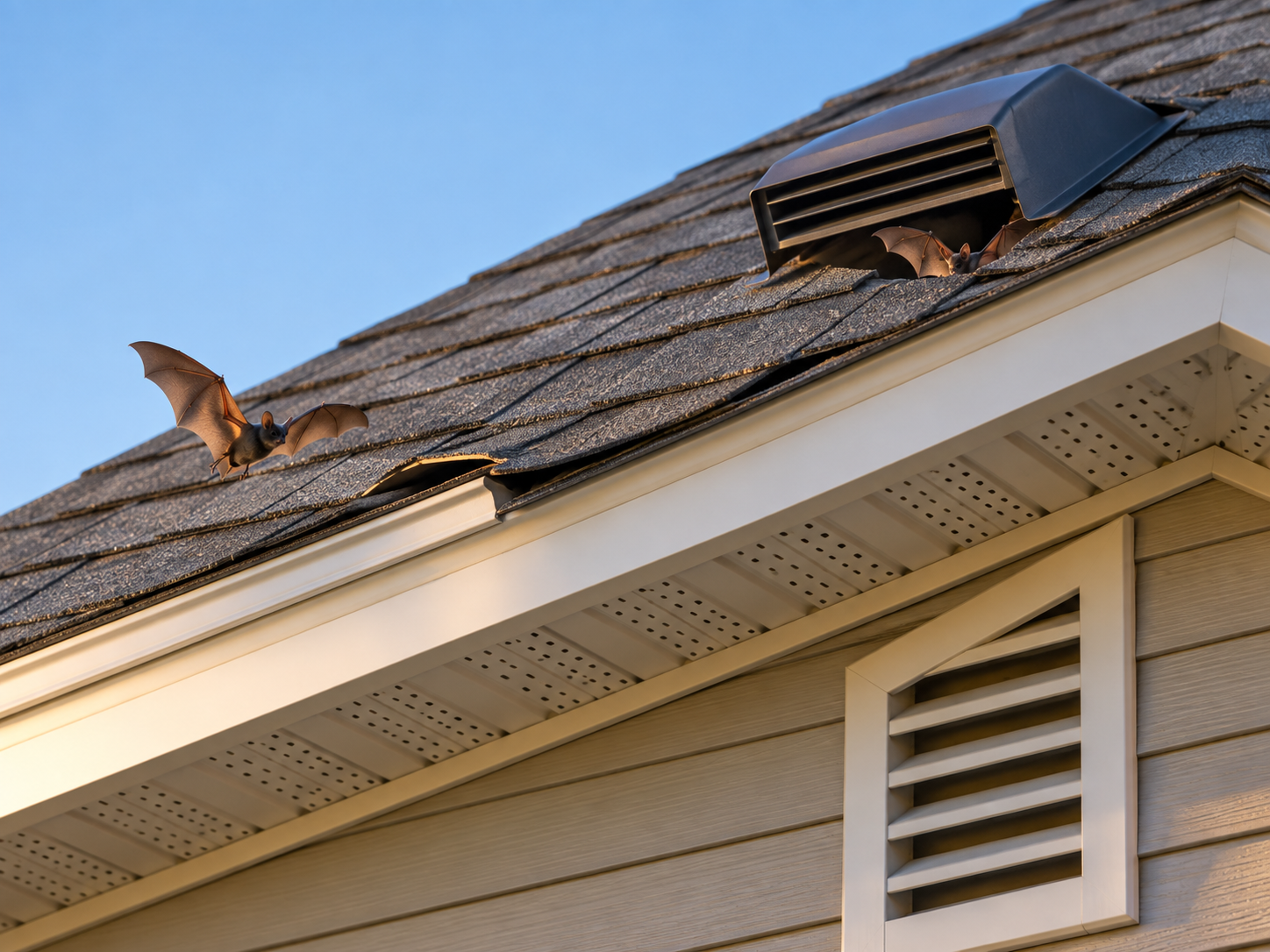
Many removal jobs focus on the obvious entry point—the one bats are seen using most often—while leaving several smaller, less visible gaps untouched. Bats don’t chew through materials like rodents do. Instead, they exploit existing openings in a structure’s exterior.
This means a home can have multiple active entry points at once. Sealing just one and calling the job finished leaves the door wide open, quite literally, for bats to return through a gap a few feet away.
Common Re-Entry Points Homeowners Miss
Because bats can flatten their bodies to fit through tiny openings, some of the most common re-entry points are easy to overlook during a quick inspection.
Vents and Chimney Flashing
Gaps around chimney flashing and loose or damaged vent covers are frequent culprits. These areas often have small separations that develop over time due to weather and settling.
Soffits and Fascia Boards
Warped or gapped soffits and fascia boards create hidden channels into the attic. Metal flashing at fascia-to-roof transitions is especially prone to concealing bat-sized openings.
Foundation and Exterior Wall Cracks
Cracks in the foundation or exterior walls may seem unrelated to attic activity, but bats can use these lower-level gaps to access wall voids, which often connect to spaces higher up in the structure.
Why Professional Inspection Matters
Spotting every vulnerable point on a home’s exterior takes more than a walk around the yard. Professional bat removal services use thermal imaging to detect heat signatures bats leave behind near entry points, along with borescopes to inspect voids without damaging the structure.
This level of inspection reveals gaps that are easy for an untrained eye to miss, including expansion gaps at rooflines and channels between soffits and attic spaces. Without this thorough approach, re-infestation isn’t a matter of if, but when.
How to Prevent Bats From Returning
Stopping bats for good comes down to three key practices:
- Seal every opening larger than 3/8 inch. This includes gaps around vents, chimneys, soffits, fascia boards, and foundation cracks.
- Install one-way exclusion devices. These allow bats already inside to leave but prevent them from re-entering, an essential step before final sealing.
- Schedule annual inspections. Catching new gaps before bat season begins (typically spring) helps prevent problems before they start.
Frequently Asked Questions
How long does bat removal take?
Exclusion typically takes one to two weeks, depending on the number of entry points and the time needed to monitor for remaining activity before final sealing.
Can I remove bats myself?
DIY exclusion carries real risks, including working at heights, missing hidden entry points, and violating wildlife protection laws that restrict removal during maternity season. Professional help reduces the chance of a repeat infestation.
What’s the best time to remove bats?
Late summer or fall, after pups can fly, is ideal. Many regions restrict exclusion during maternity season (often June through August) to protect non-flying young.
The Bottom Line
Getting rid of bats for good means sealing every entry point, not just the obvious one. A thorough, professional inspection makes the difference between a permanent fix and a repeat problem next season.
If bats have returned to your Indianapolis home, our team can identify every entry point and put a lasting exclusion plan in place. Contact us today for a comprehensive inspection.
Related Posts:
The Dos and Don’ts of Safe Bat Removal
Bat Removal 101: The Safe, Humane Process Pros Use (and Why DIY Often Fails)
Understanding the Risks: Why Professional Bat Removal is Essential