How to Protect Your House From Bats This Halloween

Halloween is certainly a time for all things spooky. Fortunately for us, the spookiness is pretend! But when it comes to bats, although a fun symbol for Halloween themes, they are a real-life seasonal threat to your house. Continue reading to why bats can be a hazard this time of year, how to identify a nuisance bat problem, and what you can do to protect your home from bats this season and every season that follows.

Indianapolis Bat Removal and Control
Indianapolis Bat Removal and Control 317-535-4605

Bats This Time of Year

Here in Indiana, bats hibernate for the winter. Although many species migrate toward warmer climates, several others remain locally, and find winter dens that will keep them safe for the season. Generally, caves and underground mines serve as winter bat roosts, but bats are also known to frequently take shelter in man-made structures like barns, sheds, attics, and similar edifices. This is problematic because bats, while roosting, can cause an extreme amount of structural damage, and also pose several health and safety risks for surrounding people and pets. Since bats look for suitable shelter for the winter, they are often a problem for property owners this time of year.

Signs of Nuisance Bat Activity

The signs of bat activity and bat infestations are quite easy to see once you are looking for them. One of the most common signs of exterior bat activity include bat droppings around window sills and door frames, where bats enjoying perching in between hunting. Also, spotting bats flying around your house at dusk is proof that a local colony resides nearby. Signs of bat infestations include chirping and fluttering noises coming from the attic or walls, strange odors coming from the inside of your house, yellow or brown-like stains on your ceiling or walls, and oily black stains on your siding.

What You Can Do

The best strategy to protecting your home from nuisance bats is preventative maintenance. Contact a local bat removal and control company for a full-property inspection. They will locate any openings or gaps capable of allowing bats access into your house, and then seal them up with specialized materials and equipment. You see, bats can squeeze through a hole as little as 3/8ths of an inch, so there could be vulnerabilities in your house’s exterior that you are unaware of.

Who to Trust for Safe and Humane Bat Control

Call 317-535-4605 for prompt and professional Indianapolis bat removal services you can trust. We are DNR licensed and insured wildlife control contractors that specialize is safe, non-lethal bat exclusion and extraction services. Whether commercial or residential, we are fully-equipped to extract from any property. We also provide 24 emergency bat removal, dead animal removal, bat proofing, attic restoration for bat damages, and more. Request a free estimate, anytime.

Indiana Bat Removal 317-535-4605

How to Find Affordable Bat Removal Service in Broadripple Indiana

Bats are fascinating mammals with incredible flying skills, but they are not something we want dwelling inside our property. Bats are so small, they can fit through a gap as small as 3/8ths of an inch! This ability makes it easy for them to find access points into homes and buildings, eventually settling in dark and isolated areas, such as attics, sheds, garages, roofs, soffits, gutters, and crawl spaces.

Here in Broadripple, we have hundreds of homes, buildings, and structures that are very old, giving bats an easily accessible and comfortable habitat to roost in for the fall and winter. This means that right now is a common period of time when property owners discover bat infestations. Whether you found one bat or one hundred, it is vital that you take action immediately.

Continue reading to learn where you can get prompt emergency bat removal service in Broadripple, Indiana.

Broadripple Bat Removal and Control
Broadripple Bat Removal and Control 317-535-4605

Broadripple Bat Removal and Control

Our Broadripple bat removal experts are your solution for prompt, professional, and inexpensive bat control services in Indiana. We are seasoned bat removal contractors licensed by the Department of Natural Resources and qualified by our decades of experience in the industry. Furthermore, we only use safe and humane methods to extract bats and relocate them to a safe and faraway habitat. In fact, one of our licensed Broadripple bat control experts is standing by right now to provide more information about getting rid of bats!

What We Do

We offer a wide range of bat control services for both residential and commercial properties throughout the state, including bat removal, bat cleanup services, minor attic restoration for damages caused by roosting bats, emergency service, and much more. We provide the following bat removal services and more in all Central Indiana cities and counties: 

☑ Emergency 24 Hour Bat Removal
☑ Endangered Bat Removal
☑ Non-lethal Bat Extermination
☑ Bat Exclusion & Prevention
☑ Bat Damage Insurance Claims
☑ Bat Clean Up & Odor Control
☑ Damage & Restoration Services
☑ Home Inspection & Analysis
☑ Insulation Removal & Replacement

Get Started With a Free Quote

If you suspect you have a bat infestation in your home, don’t wait too long before calling a professional! Simply contact our main office at 317-535-4605 and request free information about bat removal in Broadripple, Indiana and its surrounding counties. When you call Broadripple bat removal, you can expect a short ring-time, a friendly greeting, and an abundant amount of reliable information. We are happy to provide free estimates, advice, and answer any questions you might have about bats in the attic or some other area of your home.

What is White Nose Syndrome in Bats?

Bats are known hosts to more than 60 Zoonotic viruses, all of which can be transmitted to people, pets, and other animals. Additionally, bats are carriers of several infectious viruses, bacteria, and parasites that can also be contagious. However, there are some illnesses that bats can contract, but cannot pass onto us. And White Nose Syndrome (WNS) is one of the most common examples of such illnesses.

Continue reading to learn more about White Nose Syndrome in bats, as well as, how you can protect your home or building from nuisance bat interference.

Indianapolis Bat Removal and Control 317-535-4605
A wildlife biologist checking the wings of a Big Brown Bat for signs of White-nose Syndrome.

White Nose Syndrome (WNS)

Hibernating bats are vulnerable to a debilitating disease called White Nose Syndrome (WNS). It gets its name from the distinctive symptoms it renders in bats, namely a white fungal growth on their noses, muzzles, and other areas of the body. In North America, this disease is spreading quickly among Microchiroptera populations, and has caused millions of bat fatalities. Eastern parts of the country have been most affected, but reports of WNS detection have come as far West as Oklahoma, and as far North as Canada. Continue reading to learn more facts about White Nose Syndrome in bats.

Top Facts About WNS:

⇛ Bats infected with WNS will show strange signs and exhibit odd behaviors. This includes daytime activity and clustering near the entry points of their roost.

⇛ According to White-Nose Syndrome.org, WNS has caused more than 5.5 million bat deaths to-date in the Northeast parts of the United States and Southern parts of Canada.

⇛ State and federal biologists are working with several laboratories to continue studying and investigating the correlation between fungi and bat deaths.

⇛ White Nose Syndrome affects bats that hibernate. More than 45% of bats in our country are hibernating species, four of which are endangered and already suspected of being infected.

⇛ Known species affected by WNS include the Big Brown bat (Eptesicus fuscus), Little Brown bat (Myotis lucifugus), Eastern small-footed bat (Myotis leibii), Endangered Gray bat (Myotis grisescens), Indiana bat (Myotis sodalis), Northern long-eared bat (Myotis septentrionalis), and    Tricolored bat (Perimyotis subflavus).

⇛ Species that are suspected, but not yet confirmed, to be infected with WNS include the endangered Virginia Big-Eared bat (Corynorhinus townsendii virginianus) and the endangered Ozark big-eared bat (Corynorhiunus townsendii ingens).

⇛ WNS is still spreading across North America. Today, more than 19 states (Alabama, Connecticut, Delaware, and Indiana) and 4 Canadian provinces have been confirmed sites of WNS outbreaks. 

⇛ Geomyces destructans is a newly-discovered fungus that is suspected to cause White Nose Syndrome in bats.

⇛ Species that are suspected, but not yet confirmed, to be infected with Geomyces destructans include the Cave bat (Myotis velifer) and the Southeastern bat (Myotis austroriparius).

Indianapolis Bat Removal and Control

Sometimes bats can get too close, and give us trouble. If you have nuisance bats, call 317-535-4605 to speak with a friendly and knowledgeable wildlife abatement specialist about bat removal and control services in Indianapolis, Indiana. Don’t let bats damage your property and cost you thousands of dollars in renovations! Let our DNR licensed and insured bat removal specialists provide the workable solutions you need.

Indiana Bat Removal 317-535-4605

Where to Get Help With Your Bat Infestation Insurance Claim

Nuisance wild bats are not something you want loitering around your home. Although they are among the best insect control you can have, especially for mosquitoes in the summer, they are not conducive to urban living. Bats are known to cause extensive amounts of damage to both interior and exterior areas of a home or building. If you suspect that you have an abnormal amount of bat activity on your property, it will help to consult a professional wildlife removal and control company for expert advice and service.

Continue below to learn who to trust for this level of expertise in Indianapolis.

Bat Damage Restoration Cleanup Indianapolis
Indianapolis Bat Damage Cleanup and Restoration 317-535-4605

Call Bat Removal Indianapolis for Bat Damage Insurance Claim Help!

Our DNR licensed and insured wildlife rescue and control experts have decades of experiencing resolving bat infestations and the subsequent damages left behind. We are a ONE-STOP-SHOP for bat removal and control, as we provide comprehensive bat abatement and protection services for both residential and commercial properties. If you are having trouble dealing with your home owners’ insurance carrier regarding a recent bat infestation and resulting damages that need restoring, trust us for professional and expedient assistance.

Here are some of the more common insurance companies we work with to provide bat damage cleanup and restoration in Central Indiana:

✤ Allstate ☎ 1-800-255-7828
✤ American Family Insurance ☎ 1-800-692-6326
✤ Amica ☎ 1-800-242-6422
✤ Auto Owners ☎ 1-888-252-4626
✤ Chubb ☎ 1-800-252-4670
✤ Farmers ☎ 1-800-435-7764
✤ Nationwide ☎ 1- 877-669-6877
✤ The Hartford ☎ 1-800-243-5860
✤ State Farm ☎ 1-877-459-2347 ext. 2
✤ Liberty Mutual ☎ 1-866-219-7100

Bat Cleanup and Restoration Services

Cleaning up after bats is a job for a professional. Damage caused by bat droppings and urine can decrease the value of your home if not cleaned up correctly with the appropriate cleaning agents and equipment. It is important to trust the task of cleaning up bat droppings to one of our bat conservation and removal specialists.

Get Started With a Free Quote

Call our office at 317-535-4605 for information about bat cleanup and restoration in Indianapolis, Indiana. We offer 24 hour bat removal services for emergencies, which includes bats in the house. Our bat abatement services are comprehensive, and include extraction, exclusion and proofing, integrated pest management, environmental modifications, minor attic restorations for damages caused by bats, full-property inspections, 24 hour emergency services, and much more.  Request a free estimate or bat control advice, anytime.

Indiana Bat Removal 317-535-4605

What are Yangochiroptera Bats?

Historically, bats have been scientifically categorized into two primary suborders: Microchiroptera and Megachiroptera. These two suborders have been more commonly known as “microbats” and “megabats”, both retaining their own set of special characteristics, attributes, behaviors, and more.

However, colloquial modifications to the scientific subordinal nomenclature of bats have been made in the recent years to more accurately describe the microbat species. So the taxon, Microchiroptera, is now seen as Yangochiroptera, with the exclusion of some microbat species. Continue reading to learn more.

Bat Removal and Control 317-535-4605

Yangochiroptera Suborder

Yangochiroptera is a suborder of Chiroptera order, and is also known as the Vespertilioniformes suborder. This suborder contains all microbat families, with the exception of Megadermatidae, Rhinolophidae, Rhinopomatidae, and the Hipposideridae bat families.

Megabats, as well as the 4 above-mentioned bat families, are part of the suborder Yinpterochiroptera. In contrast, some researchers believe the classifications Pteropodiformes and Vespertilioniformes are more accurate, and use them instead of Yinpterochiroptera and Yangochiroptera.

Why the Change?

Although the suggestion to implement the term Yangochiroptera dates back to 1984, it has recently been recognized more heavily in the world of science. The change has been proposed to contest the traditional view that megabats and microbats form monophyletic groups.

The categorization of bat families in the Yangochiroptera suborder is based mostly on molecular genetics data, as well as, current studies that use molecular and morphological cladistic methodology to research bat evolution.

Common Families of Yangochiroptera Bats:

🦇 Cistugidae (Wing-gland bats)
🦇 Emballonuridae (Sac-winged bats)
🦇 Vespertilionidae (Vesper bats)
🦇 Phyllostomidae (Leaf-nosed bats)
🦇 Myzopodidae (Sucker-footed bats)
🦇 Furipteridae (Smoky bats)
🦇 Miniopteridae (Bent-winged or long winged bats)
🦇 Noctilionidae (Bulldog bats)|
🦇 Molossidae (Free-tailed bats)
🦇 Mormoopidae (Ghost-faced bats)
🦇 Mystacinidae (New Zealand short-tailed bats)
🦇 Natalidae (Funnel-eared bats)
🦇 Nycteridae (Hollow-faced bats)
🦇 Thyropteridae (Disk-winged bats)

Indianapolis Bat Control Assistance

Call 317-535-4605 to get rid of bats in Indianapolis, safely and humanely. We are DNR licensed wildlife rescue and control professionals who specialize in a wide range of non-lethal residential and commercial bat abatement services. We only use safe and humane methods to extract bats and prevent their return, and offer the most competitive prices in town. Request a free estimate, today.

Indiana Bat Removal 317-535-4605

Where to Get Emergency Bat Infestation Services in Indianapolis

Dealing with a bat infestation is overwhelming messy and dangerous. If you have bats in the house, you need a skilled and experienced team for professional bat extraction, exclusion, cleanup, and overall abatement service. So who do you call for this level of help?

Our DNR licensed and insured wildlife rescue and control specialists at Bat Removal Indiana! Continue below to learn what we can do for you, and how to get started.

Indiana Bat Removal 317-535-4605

If anybody understands the perils of bat infestation problems, it would be us. We have seen first-hand just how destructive bats can be. Not only are they capable of making a huge mess and leaving behind all sorts of structural damage, they also pose a long list of health and safety risks. You see, bats can spread diseases, and even parasites like ticks and lice. So if you have bats in the attic or other area of your property, it is vital that you act fast! Call our professional bat control technicians to manage all of your bat control needs, safely and humanely.

Bat Removal and Control 24 Hours a Day

If you suspect your home or property has been invaded by bats, do not wait another minute to contact our professionals!  The longer you wait, the more damage can occur! Our DNR licensed and insured wildlife rescue and control specialists provide non-lethal bat removal services in Indianapolis and throughout Central Indiana.

We provide a wide range of residential and commercial bat removal services, including non-lethal bat extraction, bat exclusion and prevention, bat damage insurance claims, bat clean up and restoration, bat mite fumigation, bat inspection, endangered bat removal, free estimates, and much more. We are dedicated to safe and humane capture and release strategies, as well as providing safe and secure living quarters for you and your family. 

In fact, Just Contact Us Right Now!

blue background

Bats can certainly be a hassle and cause extensive damage over time, so do not hesitate to call us right away.  We have bat removal experts standing by, ready to answer any bat related question you may have.  Call our office at 317-535-4605 if you believe you have found an endangered bat on your property. We offer 24 hour bat removal services for emergencies, which would include Indiana bats in the house. Request a free estimate or bat control advice, anytime.

Recommended Blueprints for Making a Bat House

Bats serve a vital ecological role in our surrounding environment and local economies. Not only do they help pollinate our forests and crops, they consume thousands of flying insects each night, delivering excellent pest control for farmers and outdoor lovers, alike. And this is really just the start of what makes bats so ecologically important to our society and our planet as a whole.  For these reasons, many property owners who live near wooded areas and bodies of water enjoy supporting the local bat populations.

There are various ways you can join this effort, and one is to install bat houses around your property. You can purchase pre-constructed bat houses online, which range in price depending on size, retailer, and various other factors. On the other hand, if you are handy and have experience with tools, you can build your own bat house.

In fact, continue below for a list of the top-most recommended bat house blueprints that you can purchase or download for free!

Indianapolis Bat Removal and Control
Indianapolis Bat Removal and Control 317-535-4605

Do Your Bat House Research First!

It is important to do your research and learn how to properly install bat houses. They must be constructed and mounted according to certain specifications for them to be safe and humane for bats, and do not pose any risks to you and your home.

For instance, bat houses should not be installed on trees, and instead, should be mounted on wooden posts, steel poles, or pivot poles. Additionally, they should be mounted at least 15 feet off the ground in an area that gets 6 to 8 hours of direct sunlight.

Furthermore, bat houses should be mounted at least 30 feet away from any houses or occupied structures; this is to protect properties from bat damages and infestations, as well as, keep bats and pets separated.

Free Bat House Instructions

Here is a basic bat house guide provided by the DIY Network:

DIY Network – Basic Bat House Guide

The National Wildlife Federation provides this excellent bat house instruction guide:

NWF Bat House Guide

Check out this unique bat house made out of an old wooden pallet:

Wooden Pallet Bat House Guide

Bat House Blueprints for Sale

Enthusiasts recommend the Bat House Builder’s Handbook. It is available for sale online, here.

Indianapolis Bat Removal and Control

Indiana Bat Removal 317-535-4605
24/7 Service

Sometimes bats can get too close, and give us trouble. If you have nuisance bats, call 317-535-4605 to speak with a friendly and knowledgeable wildlife abatement specialist about bat removal and control services in Indianapolis, Indiana. Don’t let bats damage your property and cost you thousands of dollars in renovations! Let our DNR licensed and insured bat removal specialists provide the workable solutions you need.

Why are Bats Dangerous?

Bats are one of nature’s most fascinating mammals.  Not only do bats consume thousands of insects each night, their guano is an effective fertilizer used in multiple industries around the world.  With all of these positive characteristics in tow; what exactly makes a wild bat so dangerous to humans and pets? 

Continue reading to better understand why wild bats are dangerous and should be avoided at all costs by humans and domesticated animals.

Indianapolis Bat Removal and Control 317-535-4605
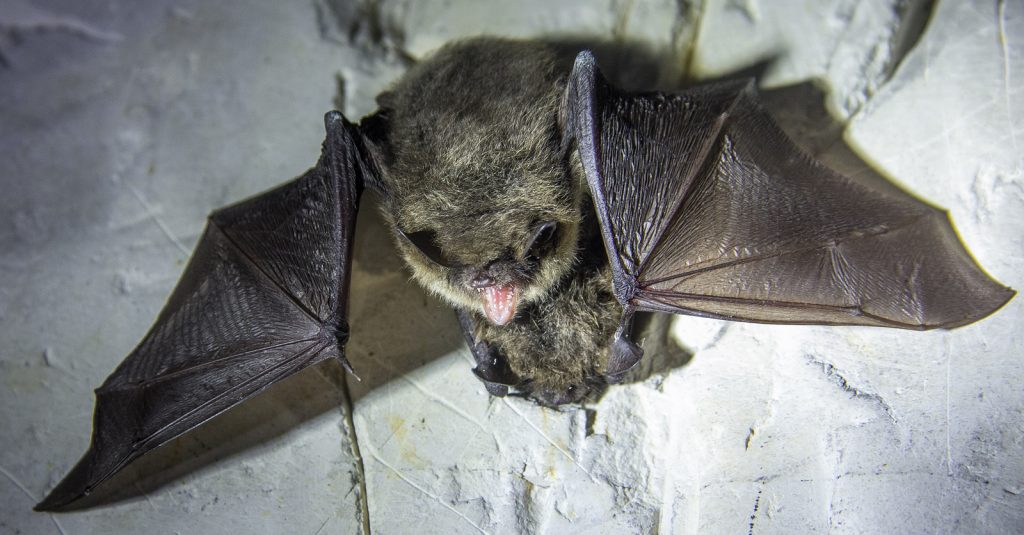
Angry pair of bats disturbed during hibernation.

Wild Bats Transmit Disease

There are various infectious diseases that bats can contract or carry.  These diseases are all hazardous to human and pet immune systems.  Bats are known to be carriers of the Rabies virus, Histoplasmosis, Leptospirosis, and even Salmonella.  All of these infections can be transferred, transmitted, and passed along to humans and pets; and they are all potentially fatal if left untreated.  

➥ Rabies

Rabies is a very well-known disease to the public.  This infection is often associated with rabid dogs, raccoons, and rats; however, the truth is, bats are common carriers of the Rabies virus as well.  A simple bat bite is all it takes to transfer saliva and bacteria into a person’s blood stream.  Some bats are so tiny, a person or pet cannot even tell they were bitten.  Once signs of illness begin to show, it is imperative to seek medical attention immediately if a person has been bitten or had contact with a wild bat.

Rabies affects the brain and nervous system, eventually causing death if untreated.  Humans are required to get a series of painful shots to eliminate the threat of spreading the virus.  Pets, on the other hand, are difficult to save once they become infected.  The virus is often times unpredictable because its incubation stages can differ drastically.  It can incubate in humans weeks and months before showing signs of contagion.

➥ Histoplasmosis

Histoplasmosis is a disease that affects the upper respiratory system.  It is caused by the fungus Histoplasma Capsulatum, which occurs naturally in warm, moist climates.  It is widely spread by bat guano and other animal droppings.  To become infected, the spores simply have to be inhaled.  Common victims of this illness are homeowners with bat infestation problems, or miners and people that work underground or in cavernous environments.  Treatment is available and death is entirely avoidable; however, if left untreated, it can be quite devastating to whoever becomes infected.

➥ Leptospirosis

Leptospirosis is another common and potentially fatal infection carried and passed on by wild bats.  IT is a bacterial disease that is spread through bodily fluids, usually urine.  It is contracted the same way as Histoplasmosis, and usually by people in similar vocations; such as miners, meat workers, farmers, and veterinarians.  It is also fatal if left untreated, but it is easily treatable if caught in the early stages.

Indianapolis Bat Removal You Can Trust

Indiana Bat Removal 317-535-4605

Call 317-535-4605 to get rid of bats safely and humanely Indianapolis, Indiana. We are happy to answer your questions and provide free estimate for bat removal and control services. Don’t let bats damage your property and cost you thousands of dollars in renovations! Let our DNR licensed and insured bat removal specialists provide the workable solutions you need.

Top 4 Signs of a Rabid Bat

Rabies is the most connected illness to bats. The reality is that countless other animals carry the rabies virus as well, but bats happen to be a notoriously known carrier. To catch rabies from a bat, a person or animal would have to be bitten, ingest their saliva, or come into contact with their waste matter.

If you ever come into contact with a suspected rabid bat, be sure to seek out immediate medical attention. For now, it is wise to learn the common signs of a bat that is infected with rabies.

Bat Removal and Control 317-535-4605

Bat Removal and Control 317-535-4605


There are various signs and symptoms a bat can demonstrate when it is infected with the rabies virus. From these various signs, there are 4 that tend to be parallel with most cases. If you see these signs in a bat, immediately get away from them and contact a licensed Indianapolis bat removal company for safe and humane extraction services. Never, under any circumstances, attempt to touch, trap, move, or harm a bat, regardless if it is ill or not.

Here are the top 4 signs of a rabid bat:

The Bat is Active in Daytime

Bats are nocturnal mammals, which mean they live in 3rd shift hours, between dusk and dawn. If a bat is seen active or awake during the daytime, it is a common indication of illness.

The Bat Cannot Fly

Bats are the only mammal on Earth capable of true flight. If you see a bat and it is having trouble flying, or cannot fly at all, it is a strong indication that they are ill; possibly with the Rabies virus.

The Bat Allows You to Come Close

Bats, like most wild animals, are not conditioned to trust humans. They will naturally flee or show defensive signs (i.e. growling, hissing, crouching, etc.) if humans attempt to come too close. So if a bat allows you to approach it, there is a good chance it is sick or seriously injured.

The Bat is Grounded

Well bats do not hang out near ground-level areas, nor any other place that exposes them to predators. When you find a bat on the ground, or some other unusual location, it is usually because they are sick or injured.

Did You Find Bats?

Indiana Bat Removal 317-535-4605

Indiana Bat Removal
317-535-4605

Call 317-535-4605 to get rid of bats in Indianapolis and its surrounding counties. We are DNR licensed wildlife rescue and control professionals who specialize in a wide range of residential and commercial bat abatement services. We only use safe and humane methods to extract bats and prevent their return, and offer the most competitive prices in town. Request a free estimate, today.

Federally Endangered Bat Species in This Region

Bats are fascinating mammals and play an incredibly important role in our surrounding eco-systems. Unfortunately, they have been pushed out of their natural habitats and forced into municipal areas due to land overdevelopment and similar human-motivated factors. As a result, bats are frequently regarded as pests, rodents, and nuisance animals. But the truth is, they are an essential part of our surrounding ecosystem, and they play an integral role in mosquito and insect control in our parks and backyards every night.

Rather than being frightened or turned off by bats, we need to be supportive of their survival; especially since there are many endangered and threatened species.

Indianapolis Bat Removal 317-535-4605

Indiana Bat
Myotis Soladis

Local Endangered Bat Species

There are more than 1,200 known bat species around the world, and 30 known species in North America. Out of the 30 known bat species in North America, there are some that are listed as federally-endangered by the U.S. Fish and Wildlife Service. In this region that surrounds Indiana, there are 3 federally-endangered bat species that are currently protected by the Endangered Species Acts. These include the Gray bat, the Indiana bat, and the Virginia Big-Eared bat. All three species have interesting and unique attributes, and should be protected and preserved to the best of our abilities.

Gray Bat ⚊ The Gray bat, Myotis grisescens, has been categorized as federally-endangered for over 40 years. When they were added to the endangered species list, there were an estimated 2 million bats left around the world.

Indiana Bat ⚊ The Indiana bat, Myotis sodalis, is very tiny, making them difficult to distinguish from other species. In fact, they look very similar to the little brown bat (Myotis lucifugus), which can be dangerous since little brown bats are not federally-protected.

Virginia Big-Eared Bat ⚊ The Virginia Big-Eared, Corynorhinus townsendii virginianus, is most distinguishable by its large ears, which can reach lengths of 2.5 centimeters or more. Unfortunately, there are only about 20,000 left. Most remain native to West Virginia, while other populations are found in Kentucky and North Carolina.

Species of Bat in Indiana

There are twelve known species of bat commonly found in the state of Indiana. The 12 species of bat found in Indiana include the Big-Eared bat, Red bat, Southeastern Bat, Hoary Bat, Gray Bat, Evening bat, Northern bat, Silver-Haired bat, Little Brown bat, Big Brown bat, the Pipistrelle bat, and the popular Indiana bat. The Big-Eared Bat has mostly migrated out of Indiana, and is not regularly seen here in the state any more but still spotted in other areas. The same goes for the Southeastern Bat.

Safe and Humane Bat Removal

If you find a bat in the attic, house, yard, or other area of your property, it is strongly recommended to contact a local Indianapolis bat removal and control company for professional assistance. Never attempt to touch, trap, catch, or kill a wild bat. This means it is not a good idea to keep them as a pet either. Although bats are highly advantageous to our surrounding eco-systems by controlling mosquito populations and pollenating forests, they are also dangerous to humans and pets, and should never be handled by an untrained individual under any circumstances.

Indianapolis Bat Removal Services You Can Trust

Indiana Bat Removal 317-535-4605

Indiana Bat Removal
317-535-4605

Call 317-535-4605 for bat removal and control in Indianapolis, Indiana. We are highly-trained and DNR licensed bat removal contractors that offer a wide range of non-lethal bat exclusion and extraction services for residential and commercial properties. We also offer bat cleanup, bat damage repair, and bat-proofing services. Call 317-535-4605 for Indianapolis bat removal you can trust.